


198X Singer De Luxe #C841764
Status: My Collection
Hunter: Francesco Menara (francescomenara)
Created: 09-01-2026 at 05:36PM
Last Edit: 09-01-2026 at 05:43PM
 Find on Ebay #AD
 Find on Etsy #AD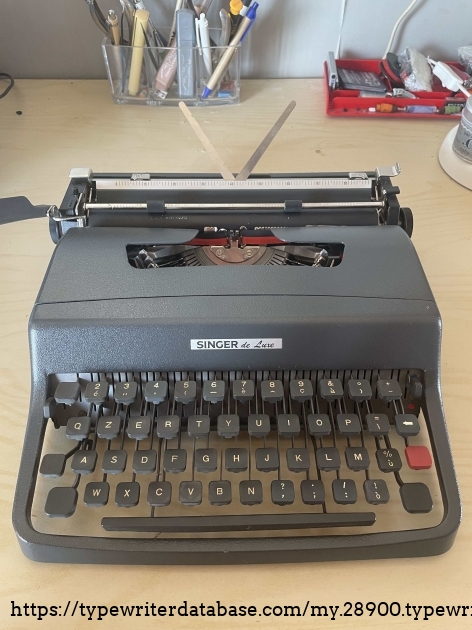
Description:
*DESCRIZIONE IN ITALIANO IN BASSO*
The American brand Singer has always been widely popular in Italy, especially when it comes to sewing machines, which could be found in practically every household; its home appliances, such as vacuum cleaners, were also fairly common. Among other things, it offered mostly low-end manual typewriters, sold in those very same appliance stores. The vast majority of these were plastic-bodied American designs—cheaply made and poor performers—yet there is one that immediately catches the eye: the Singer De Luxe.
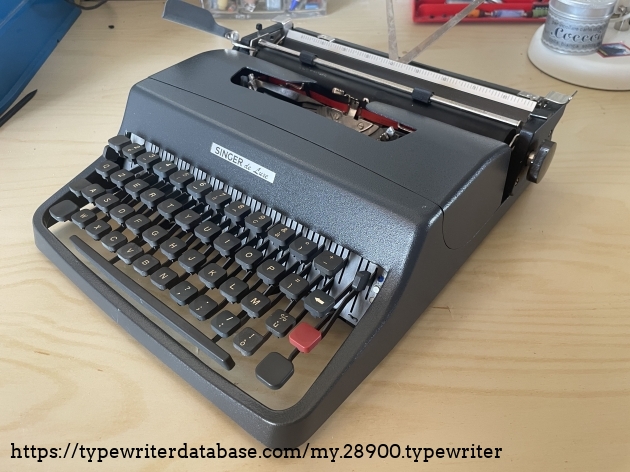
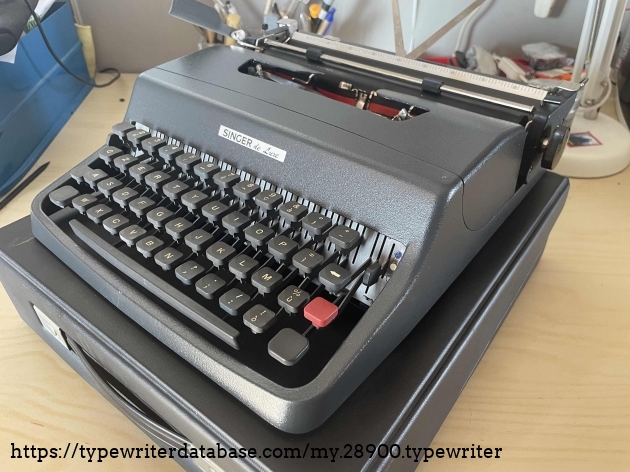
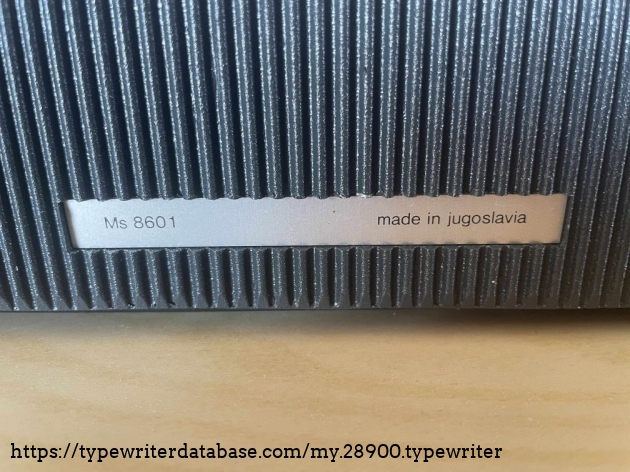
In essence, it is a rebranded Lettera 32, finished in an eye-catching charcoal gray paint—a finish never before seen on this model, which had always sported far more subdued hues. To be precise, it isn't really a Lettera 32, but rather a Lettera 62: it rolled out of the exact same factory in Yugoslavia, its serial number also starts with a C, and both materials and assembly are identical. Judging by the warranty card (long expired, presumably), the machine was distributed by European Home Product Italia S.p.A.—the same entity selling sewing machines—so we can easily picture it sitting on a shop floor sandwiched between sewing machines and a row of washing machines.
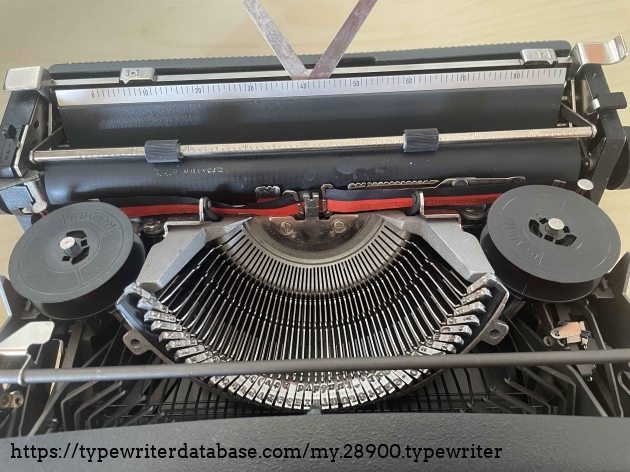
It is worth noting that when the Lettera 32 launched in 1963, it cost well over half a month's pay, whereas toward the late 1980s—when manual and electronic portables were the last ones standing on the market—it went for about as much as a decent laser printer would today. These cost reductions were achieved by offshoring manufacturing and pursuing all manner of economies of scale, and the quality gap compared to older models is palpable. Palpable in the sense that the sheet metal bends with your bare fingers. Almost every material was swapped for a cheaper alternative; numerous parts, such as the carriage return lever, the end caps, the bottom plate, and the paper feed rollers, are made of plastic. To its credit, it does feature ribbon spool spindles with drive pins, doing away with the anachronistic knurled ribbon nuts typical of Olivetti, which cause no shortage of headaches whenever they go missing.
General build quality and sloppy assembly aside, typing on it still reveals the underlying bones of the most produced typewriter in the world (an estimated 12 million Lettera 32s were built)—effortless on the fingers and forgiving of an imperfect touch. This particular example is in excellent shape, save for the carriage lock pawl which, molded from dreadful material, snapped clean off. Mind you, these machines are relatively recent, and because they were cheap to buy, they were never treated as investments; after a couple of term papers, they often wound up in some attic. Consequently, the platen is still smooth and exceptionally soft—to the point where the typebars leave an imprint while typing. That makes this specific machine remarkably quiet and a genuine pleasure to use.
*IT*
Il marchio americano Singer è sempre stato molto popolare in Italia, specialmente per quanto riguarda le macchine da cucire, presenti praticamente in ogni famiglia, ma anche i suoi elettrodomestici come gli aspirapolvere erano abbastanza diffusi. Fra le altre cose, produceva anche macchine per scrivere perlopiù manuali di fascia economica, da vendersi negli stessi negozi di elettrodomestici. Gran parte di queste macchine sono modelli americani con carrozzeria in plastica, di fattura economica e di cattive prestazioni, ma ve n’è uno che salta subito all’occhio: la Singer De Luxe.
Si tratta, di fatto, di una Lettera 32 ribrandizzata e dotata di un’accattivante vernice color antracite, inedita su questo modello che ha sempre vestito toni molto tenui. Ad essere precisi, si tratta non di una Lettera 32 ma di una Lettera 62: è infatti prodotta nello stesso stabilimento in Yugoslavia, il numero di serie inizia sempre con una C e anche materiali e assemblaggi sono identici. La macchina, a giudicare dal certificato di garanzia (presumibilmente scaduta), veniva distribuita attraverso la European Home Product Italia S.p.A., la stessa che vendeva le macchine da cucire, e quindi possiamo immaginarcela in vendita in un negozio tra queste ultime e una fila di lavatrici.
Vale la pena ricordare che la Lettera 32 quando uscì nel 1963 costava oltre mezzo stipendio, mentre verso la fine degli anni ’80, quando ormai le portatili manuali ed elettroniche erano le ultime rimaste sul mercato, veniva come una buona stampante laser odierna. La riduzione dei costi si ottenne delocalizzando la produzione e realizzando economie di scala di vario genere e la differenza di qualità con i vecchi modelli è palpabile. Nel senso che le lamiere si piegano con le dita. Quasi ogni materiale è sostituito da uno più economico, molte parti come la leva di ritorno carrello, i fianchetti, il fondello e i rullini sono realizzati in plastica. Le va riconosciuta l’adozione degli alloggiamenti bobine con piolini di trascinamento, che sostituiscono gli anacronistici dadi fermabobine tipici della produzione Olivetti e che danno non pochi grattacapi se vengono smarriti.
Al di là della qualità generale e nonostante l’assemblaggio, usandola si distingue ancora la struttura di base della macchina per scrivere più prodotta al mondo (si stima che siano state fatte 12 milioni di Lettera 32), riposante e che perdona qualche errore nel tocco. Questo esemplare è in ottime condizioni, ad eccezione del dente di bloccaggio del carrello che, realizzato in un materiale terrificante, si è spezzato di netto. C’è da dire che queste macchine sono relativamente recenti, costando poco all’acquisto non venivano vissute come un investimento, e spesso dopo un paio di tesine finivano in qualche soffitta; infatti, il rullo è ancora liscio e morbidissimo, tanto che vi resta l’impronta dei martelletti durante la scrittura. Questo rende questa particolare macchina silenziosa e piacevole nell’uso.
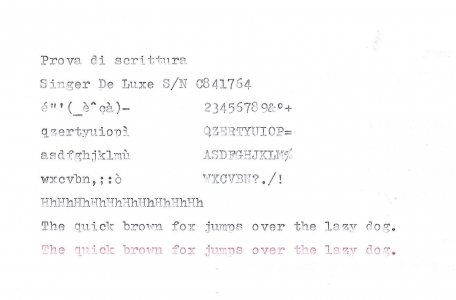
Typeface Specimen:
Photos:
Hunter: Francesco Menara (francescomenara)
Francesco Menara's Typewriter Galleries [ My Collection ] [ My Sightings ]

Status: Typewriter Hunter
Points: 195
Bologna. Italy, 24 yo.
Mechanical engineer.
Typewriter user since 2015.
I'm not a collector. They follow me and moltiplicate.
Sometimes they even come out from the rubbish bin. And ask for adoption.
RESEARCH NOTE: When researching the Singer De Luxe on a computer with lots of screen real estate, you may find that launching the Singer Serial Number page and the Singer De Luxe By Model/Year/Serial page in new browser windows can give you interesting perspectives on changes throughout the model series.